Who Signs for the Pallets? Coordinating External Suppliers in UK Training Room Hire

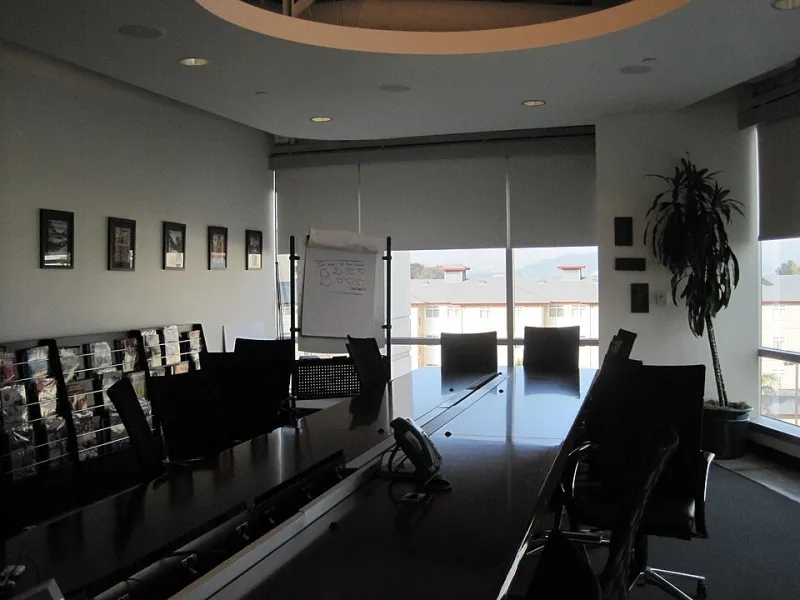
Photo by Photo by Zemos on Unsplash on Unsplash
A training day has two guest lists. The first is the delegate list, carefully managed and usually visible to everyone. The second is the supplier list — couriers, caterers, equipment hire firms, visiting facilitators, print deliveries — which is often held in one person's head and discovered by the venue receptionist at 08.15.
Most difficulties on the morning of a training event are not teaching problems. They are arrivals that were never scheduled, boxes that were never stored and deliveries that nobody agreed to sign for.
Reconnoitre the building before you need it
Before confirming any external supplier, establish how the building physically receives things. Ask the venue for the loading bay arrangements, the size of the service lift, the height of the largest doorway between the bay and the training room, and whether trolleys or pallet trucks are available.
In dense city centres, add the practical layer. Is the venue inside a clean air zone or congestion charging area? Are there delivery time restrictions on the street outside? Is there a forecourt where a van can stop for ten minutes, or will the driver be circling the block? A print delivery of twelve boxes of handouts is a trivial matter with a loading bay and a serious inconvenience without one.
Reception, passes and the signatory question
The single most useful agreement to reach with a venue concerns who may sign for deliveries. Reception staff should not be asked to accept packages addressed to an organisation they cannot identify, and a courier should not be left holding a pallet while a facilitator is mid-session.
Nominate one named person, with a mobile number, who is authorised to receive goods on the day. Provide that name to the venue in advance, along with the organisation name that will appear on the delivery labels. Where the venue requires security passes for suppliers, ask how they are issued and whether photo identification is needed.
Delivery windows and the storage problem
A delivery that arrives at the right time is a convenience. One that arrives early is a problem, because training rooms are frequently occupied by another client until the evening before.
Agree a delivery window in writing and confirm the earliest hour at which the room can accept goods. Then ask the question that is most often overlooked: where will the boxes live between delivery and use? A stack of cartons in the corner of a training room is acceptable for handouts; it is not acceptable for catering equipment, which needs refrigeration, or for equipment still in transit packaging, which generates waste that must be removed.
Ask whether the venue can offer a lockable store, whether it is charged, and whether access is available outside the booked hours.
Catering and the boundary with the venue kitchen
Where external caterers are used, the interface with the venue kitchen must be agreed rather than assumed. Clarify access times, the use of power sockets, water supply, refrigeration space, waste disposal and the point at which the venue's own staff take over the room.
A caterer who arrives at 09.30 to set up a buffet in a room where the opening session is underway creates an unavoidable disruption. Set the catering access window to close before delegates are admitted, and brief the caterer on which door to use so that service traffic does not cross the learning space.
Equipment hire: handover and return
Hired projectors, screens, hybrid kit and audio equipment introduce a second relationship with a supplier who is not the venue. Insist on a technical handover: a named contact, a test of the equipment in the room with the venue's power and network, and a documented condition on arrival.
Record serial numbers for high-value items and photograph the equipment before use. Confirm the collection window for the following day and who is responsible for packing it. Equipment left uncollected in a hired room often becomes a storage charge or, worse, a damage dispute.
Visiting facilitators and the readiness check
An external facilitator arriving to find a locked room and an unfamiliar layout will spend the first twenty minutes of their day solving problems rather than preparing. Send them a short brief: the address, the entrance to use, the reception protocol, the room name, the layout plan, where the nearest parking is, and the name of the person who will meet them.
If the facilitator is bringing materials, agree how they travel and who carries them. A trainer arriving by train with four boxes of handouts is a logistics problem disguised as an enthusiastic email.
A pre-arrival checklist
- Named supplier contact list, circulated to the venue at least five working days ahead.
- Loading bay address, access hours and any vehicle restrictions.
- Authorised signatory, with mobile number, for each delivery.
- Agreed delivery windows, with earliest and latest acceptable times.
- Storage arrangements, including refrigeration where required.
- Security pass process for suppliers and visiting staff.
- Equipment handover and test time, with a named technician.
- Catering access window and the door to be used.
- Waste removal responsibilities, in writing.
- Collection times for hired equipment and any packaging.
The sequence of the morning
The value of a checklist lies in sequencing. Equipment should arrive and be tested before catering occupies the service route. Catering should be complete before delegates are admitted. Handouts should be in the room before the facilitator needs them. Each step has a window, and each window should be given to the relevant supplier in writing.
None of this is glamorous, and none of it will feature in the delegate feedback. It is, however, the difference between a facilitator who begins at nine o'clock and one who begins at twenty past, having spent the intervening time signing for a pallet.