The Seat Beneath the Syllabus: Auditing Chairs Before a UK Training Room Booking
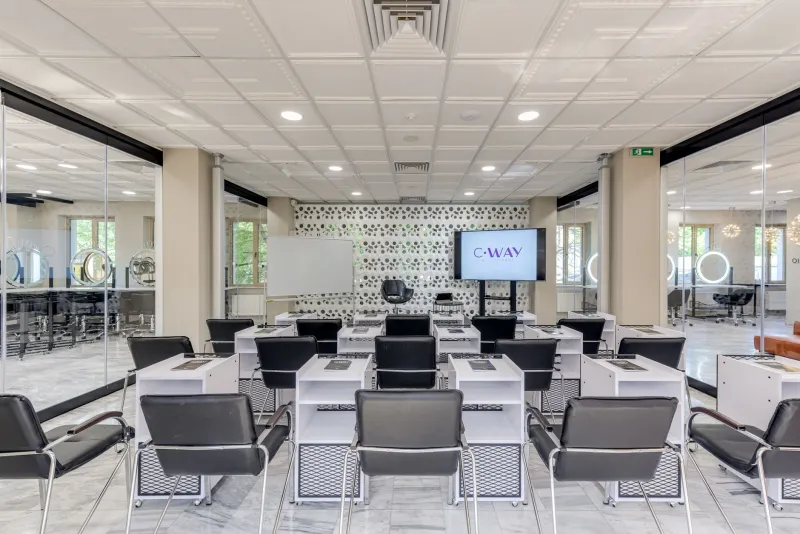
Most training room enquiries begin with capacity: how many delegates, how many tables, how many square metres. The chair is usually treated as a line item within that count. In practice, it is the piece of furniture with which learners have the most sustained physical contact across a training day. It influences posture, concentration, the speed of reconfiguration and, for some attendees, whether the session is comfortable or exclusionary from the first hour.
A chair audit is not an exercise in luxury specification. It is a practical check that the seating can support the learning design you have planned. Before signing a UK training room agreement, it is worth examining chairs with the same seriousness usually reserved for projection, acoustics and ventilation.
Begin with the day's postures, not the chair count
List the activities that will occupy the room. A morning of formal presentation may require seated listening with occasional note-taking. An afternoon of syndicate work may require repeated movement between plenary and small-group arrangements. A workshop may need chairs that can be turned quickly, stacked to one side or regrouped around different tables.
Ask whether the chairs are intended for conference use, multi-purpose use or formal examination layouts. Each implies a different balance of comfort, weight and mobility. A fixed lecture chair may be perfectly adequate for a short briefing and wholly unsuitable for a full-day programme in which learners rotate between groups. Conversely, a lightweight stacking chair may ease reconfiguration but offer limited support during long periods of seated concentration.
The useful question is not whether the chairs are good in the abstract, but whether they match the sequence of the day.
Adjustable height and table compatibility
Seat height is one of the first details to confirm. Many training chairs have a fixed height; others offer a gas-lift adjustment. Adjustment is valuable where delegates vary considerably in stature, but it is only useful if the mechanism works and is explained at the start of the day. A stiff or broken adjuster is worse than a predictable fixed chair.
Seat height must also be read in relation to table height. A chair that is comfortable alone may leave a delegate's knees pressing against an undersized table or sitting too low for comfortable writing. Ask the venue for the height of both the chairs and the tables, and test the combination during a viewing visit. If the room uses flip-top or folding tables, check that the chair can be positioned close enough without trapping knees or feet.
Where writing boards are attached to chairs, confirm the proportions available to left-handed delegates. A room that offers only right-handed tablets quietly disadvantages a portion of the group. The same applies to armrests: they can aid posture, but fixed armrests may prevent some learners from sitting close to a table or transferring from a wheelchair.
Lumbar support and the afternoon slump
Back support is not a peripheral comfort issue. A chair with a shaped back and reasonable lumbar support helps delegates maintain attention through the post-lunch period, when physical fatigue becomes more visible. Look beyond the upholstery to the structure: does the back flex, is there a curve at the lower back, and does the seat depth suit a range of users?
Cushions supplied as an afterthought are not a substitute for adequate chairs. Check the condition of the seat pad, the firmness of the foam and the cleanliness of the fabric. Worn chairs may be structurally sound but unpleasant for a full day. If the venue cannot confirm the age or condition of its seating, ask to inspect a representative sample rather than accepting a photograph of the room at its best.
Perch stools can be useful for facilitators, observers or short semi-standing discussions, but they should not be presented as all-day seating for delegates. Specify them deliberately if they are part of the plan, rather than discovering them as the only option in a breakout area.
Castors, glides and the floor beneath them
Movement matters. If the programme requires chairs to be turned for discussion, moved into circles or cleared for an activity, castors can reduce disruption. Check whether they are braked or unbraked, whether they roll freely and whether they are suited to the floor surface. Unbraked castors on a slight slope can create distraction; stiff castors on carpet can make every reconfiguration a noisy, effortful affair.
On hard floors, chair movement and scraping can affect acoustics as well as concentration. Glides may protect the floor but make chairs harder to move. Stacking chairs may save storage space but be heavier than they appear. Ask where chairs are stored, how they are returned and whether the venue expects the hirer to reset the layout.
A short test in the actual room is more informative than a specification sheet. Move a chair from a table to a circle and back again. Listen to the sound it makes. Consider whether the movement will be repeated often enough to become a running interruption.
Accessibility is a seating question too
Accessible training rooms are often assessed through doors, lifts and toilets, all of which matter. Seating deserves equal attention. Confirm whether chairs with and without armrests are available, whether any chairs have adjustable height and whether there is clear space for wheelchair users to join table groups without being placed in a corridor or at the back.
Ask about left-handed writing surfaces, removable arms and spare chairs for visitors or late additions. Check that routes between seating are wide enough for delegates to move without disturbing others. If the room is arranged cabaret-style, ensure there is still turning space and that a delegate using a wheelchair is not isolated at the edge of the layout.
These details should be confirmed in writing with the booking, not left to the morning of delivery. A venue may have suitable chairs but store them in another room; availability is part of the specification.
What to ask before you commit
A concise seating enquiry can save considerable friction later. Ask for the chair type, seat height, adjustability, availability of left-handed writing surfaces, castor type, condition, spare stock and accessible alternatives. Ask who sets out the room and who resets it. If the layout will change during the day, confirm that this is acceptable and that sufficient space exists for stored chairs.
During a viewing visit, sit for ten minutes rather than a few seconds. Test the adjustment, the back support and the relationship with the table. Walk the room as a delegate would. If the chairs are not visible, ask to see the stored stock.
The chair is not a neutral accessory. It shapes how long learners can concentrate, how readily they move into groups and whether the room feels equitable. A careful seating audit before booking helps ensure that the furniture recedes into the background of the training day, leaving attention where it belongs: on the learning itself.