Ten Questions Before the Booking Form: Accessible UK Training Rooms, Properly Specified
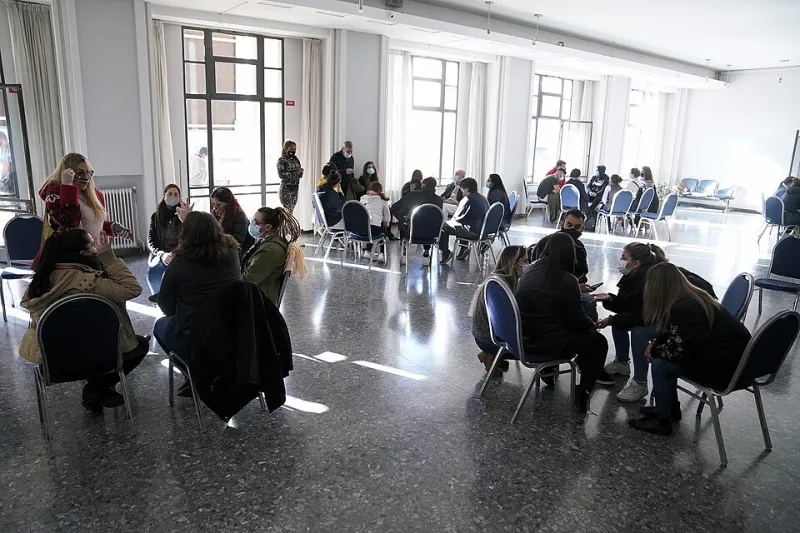
Photo: Unknown, CC BY-SA 4.0, via Wikimedia Commons
Accessibility is sometimes treated as a binary claim: a venue says it is accessible, the hirer ticks a box and the matter is closed. In practice, accessibility is part of learning design. If a learner cannot reach the room, hear the facilitator, adjust a chair or leave calmly, the session is already compromised. The questions below are intended for the enquiry stage, before a provisional booking becomes a contract. They are deliberately specific because general assurances rarely survive contact with a real group.
Accessibility is a learning-design issue
A room can meet a statutory definition of accessibility and still be awkward for the workshop you have planned. The distance from reception to the training room, the height of the tables, the glare on a screen and the availability of a quiet corner all affect how people take part. Asking about these details is not a challenge to the venue; it is a way of making the booking usable.
Ten questions to settle before you sign
-
Where does the step-free route actually begin? Ask for the route from the nearest public transport, taxi drop-off or car park to the room door. Confirm lifts, thresholds, door widths and whether the route passes through a loading bay or service corridor. A ramp at the entrance is not the same as a step-free journey.
-
How will everyone hear? Ask whether a hearing loop covers the whole room or only the front, whether a portable loop is available, and whether the room has microphones for questions. If hybrid delivery is planned, confirm how captioning or a remote audience will be supported.
-
Can the furniture be adjusted? Wheelchair users should not be placed at the back or at a table that is too high. Ask about table heights, chairs with arms, height-adjustable lecterns and clear space between cabaret tables. Confirm that the venue can set the room with accessible seating integrated, not added as an afterthought.
-
What lighting control is available? Separate circuits, dimming and blinds matter for screen readability, lip-reading and fatigue. Ask which lights can be switched independently and whether the trainer can control them from the front of the room.
-
Where is the quiet breakout space? A nearby room or alcove away from the main thoroughfare can be essential for learners who need a break from noise. Confirm whether it is included, bookable or shared with another event.
-
What does the accessible WC provision include? Check location on the same floor, door width, turning space, handrails and emergency alarm. Ask whether the WC is available throughout the event and whether it is used as storage by other users.
-
How are assistance dogs accommodated? Ask where a dog can sit without blocking aisles, whether water is available and where the nearest relief area is. A general dogs-welcome policy is not the same as a workable arrangement for a working dog.
-
What is the evacuation plan for disabled learners? Ask about personal emergency evacuation plans, refuge points, visual alarms and staff assistance. Confirm who will brief the trainer and whether the plan changes if a lift is out of service.
-
How will the venue record requirements? Ask who captures access needs, by when, and how those details reach the room set-up team. Confirm whether the booking system has a field for access requirements or whether the information sits in an email.
-
What happens if a lift fails? Ask about contingency arrangements, alternative rooms and notification procedures. A room that is accessible on paper can become inaccessible on the day if the only lift is out of service.
Put the answers into the booking record
The common mistake is to leave accessibility as a verbal assurance. A short written summary in the booking confirmation is more useful. Name the venue contact who owns access arrangements, request a scaled plan showing the room set-up, and schedule a brief walk-through if the group has complex needs. For larger events, include access information in the facilitator brief and in joining instructions. The Equality Act 2010 provides the legal framework, but the practical test is simpler: can every learner take part in the planned activity without being separated from the group? If the answer is uncertain, keep asking before the signature.